Home: https://peptide-news.com/
How to Read a Peptide Certificate of Analysis (COA)
For research purposes only: This article discusses compounds that remain unapproved by the FDA for human consumption. This piece is written for research and educational use only and is not intended as medical guidance or encouragement for individual use.
Understanding a Peptide Certificate of Analysis (COA) is crucial for anyone involved in peptide research. A COA is a report from an analytical lab that outlines the purity and quality of a peptide batch. While the numbers and terminology can seem cryptic at first, once you know what to look for, you’ll be able to compare products confidently and avoid low-quality suppliers.

What Is a COA?
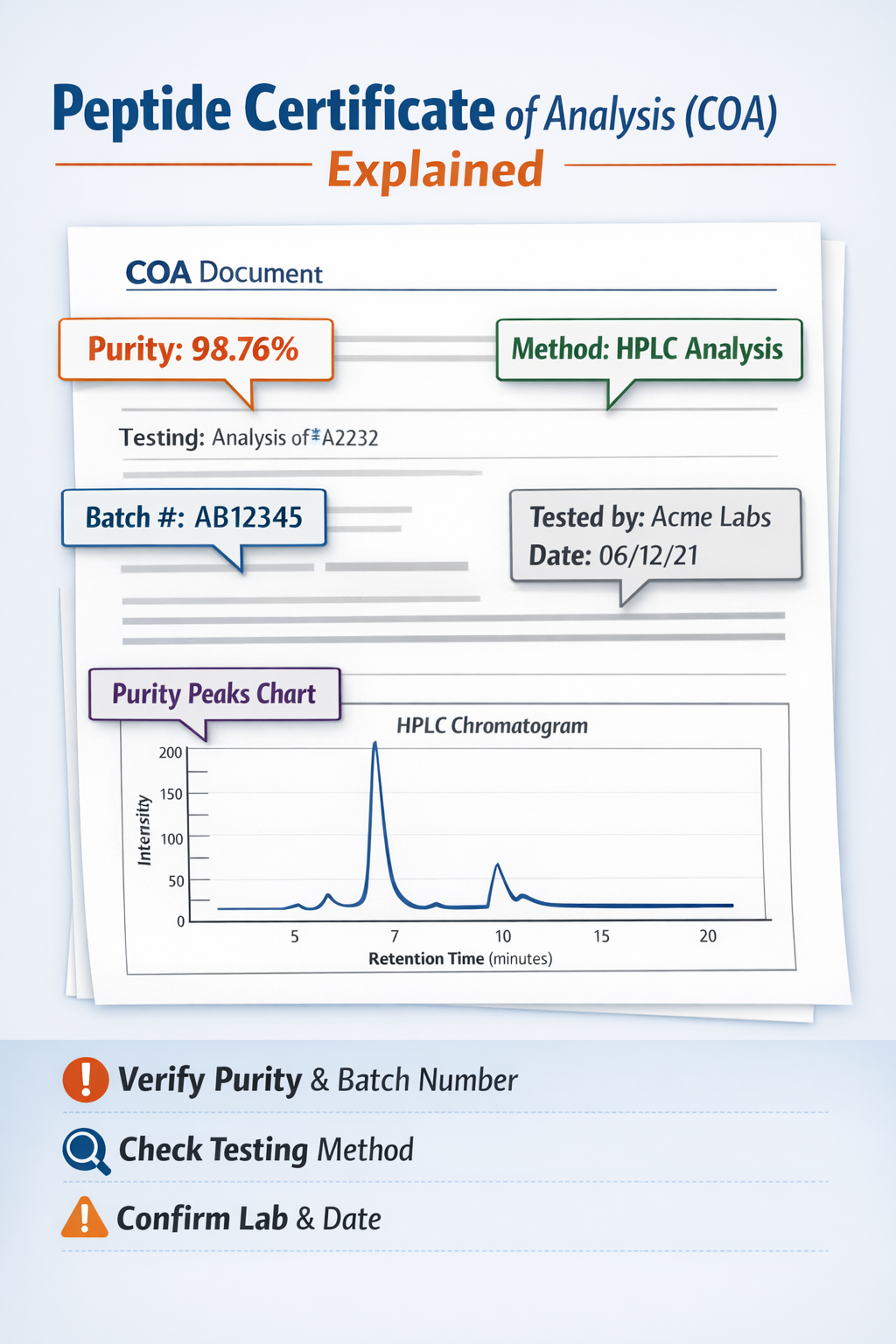
A Certificate of Analysis (COA) is an official document issued by a lab that verifies the makeup of a peptide sample. It typically includes:
- Purity percentage
- Testing method (e.g., HPLC, LC-MS)
- Batch or lot number
- Lab name and date of testing
- Retention times or peak graphs
Key Sections of a COA Explained
1. Purity Percentage
This is one of the most important numbers on the COA. It shows how much of the sample is the peptide you think you bought. A higher percentage typically indicates higher product quality.
2. Method of Analysis
Common methods include HPLC (High Performance Liquid Chromatography) and LC-MS (Liquid Chromatography–Mass Spectrometry). These methods determine the composition of the sample and identify impurities.
3. Batch or Lot Number
This is a unique identifier for the production run. Matching the COA’s batch number to the product packaging ensures authenticity.
4. Lab Name & Date
The name of the lab that conducted the testing and the date the test was performed are both essential for traceability and trustworthiness.
5. Chromatogram or Peak Graph
This visual representation shows the results of the analysis. Sharp, well-defined peaks typically indicate a purer product.
Why COAs Matter
A COA tells you whether a peptide is what it claims to be. Products without a COA or with incomplete data may be mislabeled or contain impurities. Always choose suppliers who make COAs easy to find and understand.
Examples of Reputable Peptide Sources
When evaluating peptide suppliers, it helps to choose vendors who provide clear and full COAs. Here are some options commonly referenced by researchers:
- Iron Peptides – Known for transparent COAs and accessible lab documentation.
- Peptides Kingdom – A supplier with reputable testing standards and published COAs.
Tips for Comparing COAs
- Always check that the COA batch number matches the product you received.
- Look for both HPLC and Mass Spec data when available.
- Be cautious of COAs that lack clear purity percentages or lab credentials.
Reading COAs gets much easier with practice. Once you know what to look for, you’ll be able to evaluate suppliers confidently and invest in quality products for your research needs.
Step-by-Step: How to Read Your COA in Under 2 Minutes
- Match the peptide name and batch number on the COA to the label on the vial you received. A mismatch is an immediate red flag.
- Check the purity percentage. Most legitimate research peptides report 98% or higher.
- Confirm the testing method. Look for HPLC and, ideally, mass spectrometry (LC-MS or MS) data, not just a single vague “purity test.”
- Look for a named, verifiable lab. Reputable third-party labs (not the seller’s in-house team) add credibility.
- Check the test date. COAs older than the product’s shelf life, or with no date at all, are worth questioning.
- Review the chromatogram. A single sharp, well-defined peak generally indicates a clean sample; multiple or broad peaks can indicate impurities or degradation.
COA Red Flags Checklist
Use this checklist to quickly spot a COA that shouldn’t be trusted:
- No batch or lot number, or a batch number that doesn’t match the product packaging
- No named testing method (HPLC, LC-MS, etc.) — just a stated purity number with no supporting data
- No date of testing, or a date that predates the product’s manufacture
- Generic, unbranded, or low-resolution “stock” COA templates reused across multiple different products
- No identifiable testing lab name, or a lab that can’t be independently verified
- Purity reported well above what’s realistic (e.g., “100.0%”) with no chromatogram to support it
- COA is not available at all, or is only provided after purchase rather than published up front
Frequently Asked Questions
What is a certificate of analysis for peptides?
A certificate of analysis (COA) for peptides is a lab document that verifies what’s actually in a research peptide vial — typically the purity percentage, the testing method used (such as HPLC or LC-MS), the batch or lot number, the testing lab, and the date of testing. It’s the primary way researchers verify that a peptide sample matches what the supplier claims to be selling.
How do I read a peptide COA?
Start with the purity percentage and testing method, then confirm the batch number on the COA matches your product packaging, check that the testing lab and date are listed, and review the chromatogram for a clean, well-defined peak. See the step-by-step section above for the full process.
Can a COA be faked?
Yes. Because COAs are just documents, some sellers reuse generic templates or list vague, unverifiable lab information. Cross-checking the batch number, looking for a named and verifiable lab, and being cautious of vendors who won’t provide a COA before purchase all help reduce this risk.
Do all peptide suppliers provide a COA?
No. Reputable suppliers publish COAs for each batch, often directly on the product page. The absence of a COA, or reluctance to provide one, is itself a red flag worth taking seriously. See our peptide supplier comparison for what several suppliers publish on purity and testing.
Beginner’s Guide to Peptides
New to peptides? Check out our comprehensive beginner’s guide to understand what peptides are, how they work, and why researchers and enthusiasts are exploring them for health, recovery, and performance.
Leave a Reply