A Complete Guide to Bioactive Peptides by Amino Acid Chain Length
Proteins work like grand symphonies in the body. Thousands of amino acids combine, fold, and interact to create complex, sustained biological performances. Bioactive peptides work differently. They’re the short, sharp solo notes buried inside those symphonies, fragments that stay silent while locked inside the parent protein, then trigger a specific physiological effect the moment they’re released.
What is a Bioactive Peptide?
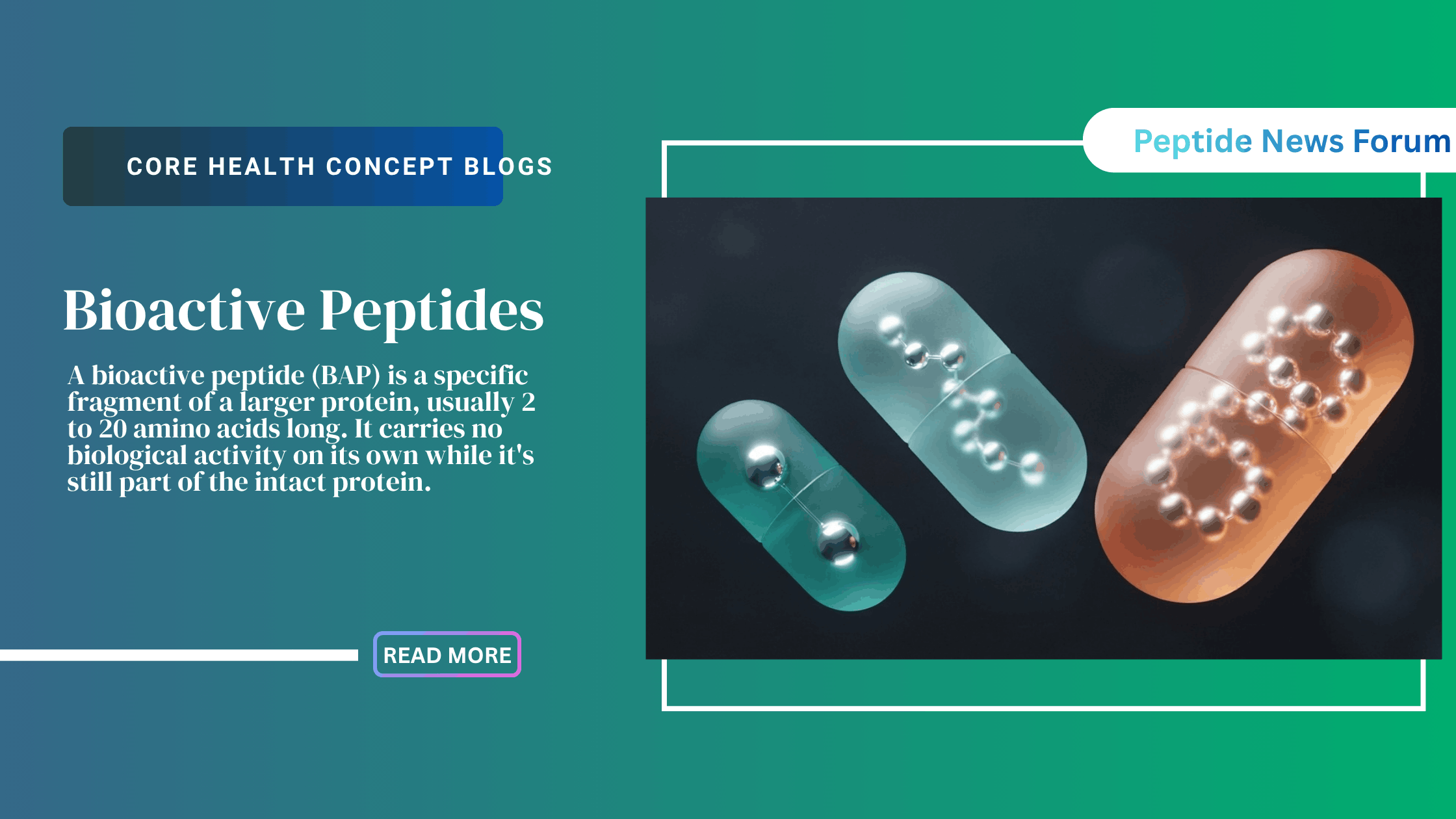
A bioactive peptide (BAP) is a specific fragment of a larger protein, usually 2 to 20 amino acids long. It carries no biological activity on its own while it’s still part of the intact protein. Digestion, fermentation, or lab-controlled hydrolysis (breaking a protein apart using water and enzymes) cuts it free, and only then does it start doing something measurable in the body.
Most articles on this topic focus on what these peptides do: lower blood pressure, fight oxidative stress, support immunity. This article focuses on something more fundamental: how a peptide’s length dictates nearly everything else about it, including whether it survives digestion, how it gets absorbed, and what kind of biological target it can actually reach.
By the end of this guide, you’ll understand three major size categories of bioactive peptides, why chain length drives both function and bioavailability, and how to apply this knowledge the next time you read a supplement label or consider a functional food claim.
Key Takeaways
- Bioactive peptides are protein fragments, typically 2-20 amino acids, that become active only after release from their parent protein.
- Chain length drives three things at once: biological function, digestive stability, and absorption method.
- Shorter peptides (dipeptides, tripeptides) survive digestion best but have simpler binding capabilities.
- Longer peptides (11-20+ amino acids) have more complex functions but rarely enter the bloodstream intact.
- In vitro success (lab dish results) doesn’t guarantee in vivo success (results in a living human body), largely because of this length-dependent degradation problem.
Why Amino Acid Chain Length Matters: The Science of Peptide Length
The Structure-Activity Relationship
A peptide’s amino acid sequence, its length, and the specific amino acids sitting at its two ends (called the N-terminus and C-terminus) together determine what it can bind to. Scientists call this the structure-activity relationship, or SAR. Think of it as a lock-and-key system. The peptide is the key. A cell receptor, enzyme, or transport protein is the lock. Change the key’s length or shape even slightly, and it stops fitting the lock altogether.
This single principle explains almost everything else in this article. A two-amino-acid peptide and a fifteen-amino-acid peptide aren’t just “different sizes” of the same basic thing. They’re built for entirely different locks.
The Bioavailability Paradox
Here’s the central tension running through peptide science, and it rarely gets explained clearly: shorter isn’t automatically better, and longer isn’t automatically stronger.
- Shorter peptides survive the digestive process more reliably. Their small size makes them harder for digestive enzymes to break down further, and some get absorbed intact. But their small size also limits how complex a binding interaction they can form.
- Longer peptides can create more sophisticated three-dimensional shapes, like beta-turns, that interact with complicated enzyme systems. The tradeoff: they’re far more vulnerable to being chopped apart by stomach acid and pancreatic enzymes before they ever get the chance to act.
A critical honest point: in vitro results, meaning effects measured in a petri dish or test tube, frequently fail to hold up once a peptide enters an actual digestive system. A peptide that elegantly blocks an enzyme in a lab setting may get destroyed within minutes of reaching stomach acid. This gap between lab promise and real-world performance is exactly why peptide length deserves far more attention than it usually gets in consumer health content.
Dipeptides and Tripeptides (2-3 Amino Acids) – The Micro-Powerhouses
Dipeptides (two amino acids) and tripeptides (three amino acids) make up the smallest, most stable, and most rapidly absorbed class of bioactive peptides. Many of them skip the usual digestive bottleneck entirely by using a specific absorption shortcut called the PEPT1 transporter, a protein in the intestinal lining that pulls di- and tripeptides straight into the bloodstream intact, without first breaking them down into individual amino acids.
Carnosine (Beta-Alanyl-L-Histidine)
Source: Meat, poultry, and fish, with the highest concentrations found in skeletal muscle tissue.
Function: Carnosine is a dipeptide that works as a powerful intracellular antioxidant. It also fights glycation (a damaging reaction where sugar molecules attach to proteins, contributing to tissue stiffness and visible aging), and it buffers pH inside working muscle tissue during intense exercise.
That pH-buffering role explains why beta-alanine, carnosine’s precursor amino acid, became a popular standalone sports supplement. Raising muscle carnosine levels may help delay the burning fatigue associated with high-intensity exercise, though individual results vary based on training status and existing dietary intake.
The Lactotripeptides (VPP and IPP)

Source: Fermented dairy products, especially milk fermented with Lactobacillus helveticus cultures, commercialized in products like Calpis® in Japan and Evolus® in Finland.
Function: Valine-Proline-Proline (VPP) and Isoleucine-Proline-Proline (IPP) are two of the most studied bioactive tripeptides in existence. Both are believed to inhibit angiotensin-converting enzyme, or ACE (an enzyme inhibitor meaning it blocks a protein that normally raises blood pressure), which theoretically helps regulate blood pressure.
Critical Analysis: This is where the evidence gets genuinely interesting, and where honesty matters more than hype. Early studies, particularly from Japanese research groups, showed meaningful blood pressure reductions. But the picture gets more complicated once you look across the full body of research.
A 2015 meta-analysis found a pooled systolic blood pressure reduction of roughly 3 mmHg and a diastolic reduction of about 1.5 mmHg, but the same analysis flagged clear publication bias: smaller, less rigorous studies tended to report bigger effects than larger, better-controlled ones. Separately, a well-known double-blind, randomized trial by Danish researcher Lotte Usinger and colleagues found no significant blood pressure effect at all under tightly controlled conditions.
Several factors likely explain this inconsistency:
- Dosage differences between studies, with some trials using amounts well above typical dietary intake
- Individual gut microbiome variation, which affects how efficiently these peptides survive digestion
- Ethnic and population differences, since several meta-analyses found stronger effects specifically in Japanese and other Asian populations compared to European cohorts
- Degradation before absorption, the same core bioavailability problem covered throughout this article
The honest summary: lactotripeptides show a real, statistically measurable, but modest effect on blood pressure in many trials, not the dramatic result early marketing sometimes implied.
Glutathione Precursor Dipeptides
Source: Whey protein hydrolysates and certain plant-derived protein sources.
Function: Dipeptides like gamma-glutamyl-cysteine supply the building blocks your cells need to manufacture glutathione internally, often described as the body’s “master antioxidant.” Rather than acting as antioxidants themselves, these precursor peptides support your body’s own internal antioxidant production system.
Visual Cue
[Infographic placement: A simple diagram showing a tripeptide molecule passing intact through the PEPT1 transporter on an intestinal cell, contrasted with a longer peptide being broken down into individual amino acids before absorption.]
Oligopeptides (4-10 Amino Acids) – The Precision Targeters
Oligopeptides occupy what researchers sometimes call the “Goldilocks zone.” They’re long enough to fold into specific secondary structures, like beta-turns, that let them interact with more complex biological targets. At the same time, they’re still short enough that some survive gastrointestinal transit, or get absorbed through paracellular pathways (meaning between intestinal cells, rather than through them).
Antimicrobial Peptides (AMPs)
Source: Egg white (ovotransferrin fragments specifically), various seeds, and marine organisms.
Function: Antimicrobial peptides, including fragments related to natural immune peptides called defensins, work by physically disrupting bacterial cell membranes. A chain length of 4 to 10 amino acids allows these peptides to form an amphipathic structure, meaning one side of the molecule attracts water while the other side repels it. This dual nature lets the peptide insert itself into and punch through a bacterial membrane, something a much shorter dipeptide simply doesn’t have the structural complexity to accomplish.
Opioid Peptides (Casomorphins and Gliadorphins)
Source: Casein (a milk protein) produces casomorphins; gluten (from wheat) produces gliadorphins, sometimes called gluten exorphins.
Function: These oligopeptides bind to opioid receptors, the same receptor family targeted by morphine, located both in the gut and in the central nervous system.
Critical Analysis: This category genuinely deserves scrutiny rather than uncritical praise or dismissal. Beta-casomorphin-7, one of the most-studied casomorphins, has shown real opioid receptor binding activity in laboratory and animal models. However, the broader claims connecting these peptides to conditions like autism spectrum symptoms or schizophrenia (sometimes called the “opioid excess theory”) have not held up well under rigorous scientific review. A major European Food Safety Authority assessment found insufficient evidence to support a cause-and-effect relationship between these peptides and the behavioral or psychiatric effects some proponents claim.
That said, dismissing this category entirely would also be inaccurate. Some individuals report genuine gastrointestinal sensitivity connected to A1 beta-casein (the specific casein variant most associated with producing beta-casomorphin-7), which has driven real commercial interest in A2-only dairy products. The fair, current summary: a physiological effect exists and is measurable, but the dramatic downstream health claims attached to it in some wellness circles outpace what the evidence actually supports.
Mineral-Binding Oligopeptides (Casein Phosphopeptides)
Source: Milk and fermented dairy products.
Function: Casein phosphopeptides, often abbreviated CPPs, carry clusters of phosphate groups that bind tightly to minerals like calcium and iron. This binding prevents these minerals from forming insoluble precipitates in the alkaline environment of the small intestine, keeping them dissolved and available for absorption. This is one of the better-established, least controversial functions in this entire size category.
Short-Chain Polypeptides (11-20+ Amino Acids) – The Complex Modulators
At 11 to 20-plus amino acids, these peptides start bordering on small proteins. They almost never make it into the bloodstream intact. Instead, they typically work locally within the gastrointestinal tract, or act as slow-release reservoirs, meaning the body gradually breaks them down into smaller, active fragments over the course of digestion.
Immunomodulatory Polypeptides
Source: Soy, rice, and marine algae.
Function: These larger fragments can interact with complex receptors on immune cells, including Toll-like receptors (a family of receptors that help immune cells recognize threats). This size-dependent complexity lets them stimulate macrophage activity (macrophages being a type of immune cell that engulfs pathogens) or modulate the release of signaling molecules called cytokines.
Satiety and Anti-Obesity Peptides
Source: Plant proteins, including soybean fractions, and marine collagen derived from fish gelatin.
Function: Certain polypeptide fragments stimulate the release of cholecystokinin (CCK) and GLP-1, two gut hormones that signal fullness to the brain. Research in this area generally shows promise in preclinical models and smaller human trials, rather than the kind of large, definitive clinical trial evidence seen with pharmaceutical GLP-1 drugs.
Growth Factor-Like Peptides
Source: Bovine colostrum, the nutrient-dense milk produced by cows immediately after giving birth.
Function: Colostrum contains IGF-1 fragments linked to tissue repair and gut lining integrity. Here’s the important caveat: these larger peptides are substantially degraded by stomach acid before they can act, which is exactly why some colostrum supplements use enteric coating (a special coating designed to survive stomach acid and dissolve further down in the intestine) to try to protect this activity.
The Bioavailability Bottleneck: How the Body Processes Different Peptide Lengths
Understanding what happens to a peptide after you swallow it explains why length matters so much in practice.
The Gastrointestinal Gauntlet
In the stomach: Pepsin (a digestive enzyme) and highly acidic conditions start breaking down proteins immediately. This stage is the primary destroyer of larger polypeptides, especially anything above 10 amino acids.
In the small intestine: Pancreatic enzymes called trypsin and chymotrypsin, along with additional enzymes on the intestinal brush border (the microscopic, finger-like projections lining the gut wall), continue breaking oligopeptides down into smaller pieces.
Absorption Pathways
- The PEPT1 transporter acts as a dedicated fast lane for di- and tripeptides, pulling them directly into intestinal cells intact, bypassing the need for further breakdown into single amino acids.
- Paracellular transport allows a small amount of absorption to happen between intestinal cells rather than through them. This route matters mainly for a narrow set of very small, specific peptides.
- M-cells, found within clusters of immune tissue called Peyer’s patches, allow larger immunomodulatory peptides to interact directly with gut-associated lymphoid tissue (GALT), the immune system embedded in your gut lining, without ever needing to enter general blood circulation.
This step-by-step breakdown is exactly why a peptide’s reported lab activity and its real-world effect in a living person can diverge so dramatically. A peptide has to survive this entire gauntlet before it can do anything measurable.

Sourcing and Production of Bioactive Peptides: How We Get the Right Length?
You can’t eat a steak and expect to absorb therapeutic quantities of free tripeptides. The proteins in whole food sit locked up, inactive, until something “unlocks” them into the right size fragments.
Enzymatic Hydrolysis
This is considered the gold standard production method. Manufacturers use specific proteases, enzymes that cut proteins at precise locations, such as Alcalase or Flavourzyme, to snip a parent protein into a target chain length with real precision.
Microbial Fermentation
Specific bacterial strains, including various Lactobacillus and Bifidobacterium species, act as natural peptide factories. This is exactly how traditional fermented foods like yogurt, kefir, tempeh, and natto generate bioactive peptides as a natural byproduct of the fermentation process itself.
In Silico Design and Chemical Synthesis
At the cutting edge, researchers use computer-aided (in silico) design, often referencing specialized databases like BIOPEP-UWM, to predict exactly which amino acid sequence and length will produce a desired biological function. Once identified, the peptide gets manufactured directly through chemical synthesis in a lab.
A worthwhile sustainability note: a growing share of this research focuses on extracting bioactive peptides from food processing byproducts, fish scales, whey permeate (a leftover liquid from cheese production), and similar waste streams, turning what used to be discarded material into a genuine source of functional ingredients.
Practical Consumer Guide: Navigating the Peptide Market
Decoding Supplement Labels
Red flag: A label listing a vague “proprietary peptide blend” without specifying molecular weight in Daltons (a unit of molecular mass). Without that number, you have no real way to estimate the actual chain length you’re consuming.
Green flag: A label that specifies hydrolyzed collagen containing “di- and tripeptides,” or one that states an average molecular weight, such as under 1,000 Daltons, which generally correlates with chains shorter than 10 amino acids.
A Food-First Approach
Different whole food sources tend to supply different peptide length categories naturally:
- Bone broth and collagen supply glycine-proline dipeptide fragments
- Fermented dairy supplies the VPP/IPP lactotripeptides covered earlier
- Diverse plant proteins, including soy, legumes, and grains, supply a wide range of oligopeptides
- Fermented soy products like tempeh and natto supply additional immunomodulatory polypeptide fragments

The Synergy Effect
Combining certain peptides with other specific nutrients appears to boost their effectiveness. The Turpeinen et al. 2009 study found that combining lactotripeptides with plant sterols in a spread produced significant reductions in both systolic blood pressure and LDL cholesterol simultaneously, an effect attributed to each ingredient acting through a separate mechanism (ACE inhibition from the peptides, reduced cholesterol absorption from the plant sterols) at the same time. Similarly, pairing collagen peptides with vitamin C is commonly recommended, since vitamin C plays a necessary role in your body’s own collagen synthesis process.
The Future of Peptide Research and Conclusion
Emerging Frontiers
- Targeted drug delivery is an active research area using peptide “homing” sequences, short amino acid tags engineered to guide a drug directly toward a specific tissue or cell type.
- Personalized nutrition represents a genuinely promising direction, since an individual’s gut microbiome composition directly affects their unique proteolytic capacity (their personal ability to break proteins down into peptides), meaning the same food could theoretically generate different bioactive peptide profiles in different people.
- Cyclic peptides may represent the next real evolution in this field. By joining the two ends of a peptide chain together into a closed loop, researchers can make a peptide virtually immune to the digestive enzymes. These normally attack chains at their exposed ends, solving much of the degradation problem covered throughout this article.
Final Summary
Chain length functions as the master key to a bioactive peptide’s function. Its survival through digestion, and how efficiently your body can absorb it. A two-amino-acid dipeptide and a twenty-amino-acid polypeptide aren’t simply smaller and bigger versions of the same tool. They’re built for entirely different jobs. Hence, understanding that distinction is the single most useful lens for evaluating any peptide-related health claim you encounter.
A final, practical call to action: prioritize diverse, high-quality whole protein sources and traditionally fermented foods as your foundation. If you’re considering a high-dose, isolated peptide supplement, particularly anything making bold therapeutic claims, talk with a healthcare provider first. Then look specifically for the molecular weight and sourcing transparency covered in this guide.
Leave a Reply