Is Tirzepatide a GLP-1?
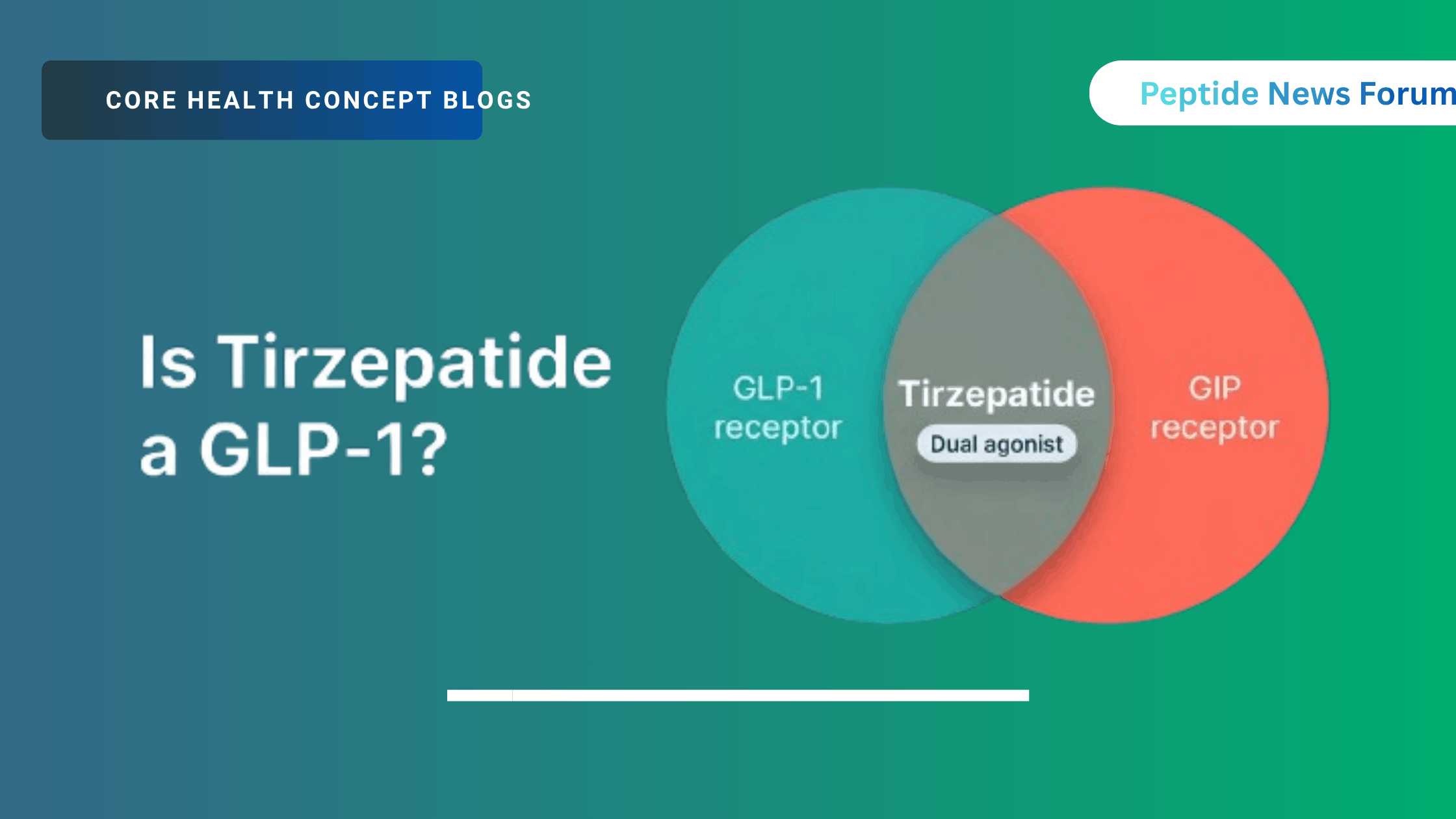
No, tirzepatide is not GLP-1. GLP-1 is a gut hormone. But tirzepatide is a GLP-1 receptor agonist, and it also activates the GIP receptor, which makes it a dual agonist.
So the answer is, Tirzepatide is partly a GLP-1 drug. It switches on the GLP-1 receptor, so it works as a GLP-1 receptor agonist. It also switches on a second receptor, the GIP receptor. That makes it a dual GIP and GLP-1 receptor agonist. Many people call it a “GLP-1 drug” in daily speech. That label is not wrong, but it leaves out half the story.
What Is the Difference Between Tirzepatide and Glp-1?
GLP-1 is a natural hormone your gut releases after you eat. Tirzepatide is a synthetic drug.
Tirzepatide copies GLP-1 and a second gut hormone, GIP. It switches on both receptors, so doctors call it a dual agonist. It also lasts far longer. Natural GLP-1 breaks down within minutes, while tirzepatide lasts about five days, so you inject it once a week.
What a GLP-1 Drug Does?
GLP-1 stands for glucagon-like peptide-1. It is a hormone. Your gut releases it after you eat. It sends four main signals:
- It tells your pancreas to release insulin.
- It lowers glucagon, a hormone that raises blood sugar.
- It slows how fast food leaves your stomach.
- It quiets hunger in the brain.
Natural GLP-1 does not last long. Your body breaks it down within minutes. Drug makers solved that problem by building longer-lasting copies. Semaglutide (Ozempic and Wegovy) and dulaglutide (Trulicity) are two examples. Doctors call these drugs GLP-1 receptor agonists. “Agonist” simply means the drug switches a receptor on.
What Is GIP, and Why Does Tirzepatide Use It?
GIP stands for glucose-dependent insulinotropic polypeptide. Most people just say GIP. It is the second major gut hormone of its kind. Scientists group GIP and GLP-1 together as incretins.
GIP works a little differently from GLP-1. Nutrients, especially fats, mainly control its release. It also helps your body release insulin. At low blood sugar, it can raise glucagon, which helps the body make more glucose.
On its own, GIP does not change body weight much. Yet tests that paired GIP and GLP-1 agonists, including single molecules that hit both receptors, produced weight loss beyond what either agent gave alone. That finding explains why researchers built a drug that targets both.
How Tirzepatide Is Built?
Tirzepatide is a synthetic peptide with 39 amino acids. Its sequence mainly follows native GIP, not GLP-1. Scientists engineered GLP-1 activity into the GIP sequence.
A fatty chain gives it staying power. A 20-carbon fatty diacid attaches to the peptide and binds albumin, which stretches the half-life to about 5 days. That is why you inject it only once a week.
The two receptors do not get equal treatment. Tirzepatide binds the GIP receptor as tightly as native GIP does. It binds the GLP-1 receptor about five times more weakly than native GLP-1 does. Scientists call this an “imbalanced” agonist. At the GLP-1 receptor, it also favors one internal signal (cAMP) over another (β-arrestin recruitment).
So the molecule leans toward GIP. Its GLP-1 activity is real, but it binds that receptor more weakly than the natural hormone does.
So, Is Tirzepatide a GLP-1?
The answer depends on how you ask.
- By receptor action: yes. Tirzepatide switches on the GLP-1 receptor.
- By drug class: not strictly. Researchers classify it as a dual agonist, not a pure GLP-1 drug.
- By everyday language: loosely yes. Doctors, news writers, and patients often call every weekly injection of this kind a “GLP-1.”
A simple rule helps. If someone asks whether tirzepatide works on the GLP-1 pathway, the answer is yes. If someone asks whether it is the same as semaglutide, the answer is no.
| Drug | Brand names | Receptors it switches on | Dosing |
|---|---|---|---|
| Tirzepatide | Mounjaro, Zepbound | GIP and GLP-1 | Once weekly |
| Semaglutide | Ozempic, Wegovy | GLP-1 only | Once weekly |
| Dulaglutide | Trulicity | GLP-1 only | Once weekly |
What the Extra GIP Seems to Do
Head-to-head trials give the best clue. In SURPASS-2, Juan P. Frías and colleagues compared tirzepatide with semaglutide 1 mg in 1,879 adults with type 2 diabetes. Tirzepatide lowered A1C by 2.01 to 2.30 points. Semaglutide lowered it by 1.86. Tirzepatide users lost 7.6 to 11.2 kg. Semaglutide users lost 5.7 kg.
In SURMOUNT-5, Louis Aronne and colleagues compared the two drugs in 751 adults with obesity and no diabetes. After 72 weeks, tirzepatide users lost 20.2% of their weight. Semaglutide users lost 13.7%.
Those results suggest the second receptor adds something. Scientists still debate how much credit the GIP part deserves. A few findings show the picture is not simple:
- A study of human islets found that tirzepatide needs the GIP receptor to trigger hormone release. nature
- One review suggests the GLP-1 part mainly drives the slower stomach emptying. auctoresonline
- Another idea says GIP may blunt the nausea that GLP-1 causes in the brain. That could allow bolder dosing. Researchers have not settled that point. Learn More about What Causes Nausea?
Animal work needs caution too. Tirzepatide behaves differently at mouse receptors than at human ones. Mouse findings may not carry over to people.
What Tirzepatide Shares With Other GLP-1 Drugs?
Tirzepatide shares the GLP-1 pathway, so it shares the main side effects. They hit the stomach first. On the Zepbound label, nausea affected 25% to 29% of tirzepatide users, against 8% on placebo. Diarrhea, vomiting, and constipation also ran higher than placebo. Most of these effects appear while the dose rises.
Tirzepatide also shares a safety warning with its relatives. Both labels carry a boxed warning, because rodent studies showed thyroid C-cell tumors and researchers do not know if the drug causes them in humans. Other GLP-1 drugs carry a similar warning. For that reason, people with a personal or family history of medullary thyroid carcinoma should not use tirzepatide.
What This Means in Practice?
When your doctor says “GLP-1 medicine,” tirzepatide fits that loose label. When you compare drugs, call it a GIP and GLP-1 receptor agonist. That name tells you it does more than a pure GLP-1 drug.
Do not treat these drugs as interchangeable. Tirzepatide and semaglutide use different doses, and the trial results differ. Never swap one for the other or convert doses on your own. Ask your doctor which drug fits your health and why.
In one line: Tirzepatide is a GLP-1 receptor agonist and a GIP receptor agonist, built into one weekly peptide.
People Also Asked in This Peptide Forum,
What is Tirzepatide Used For? The answer of the question, will help you understand the differences between GLP-1 and tirzepatide. They are completely different concepts, but they are related.
Leave a Reply