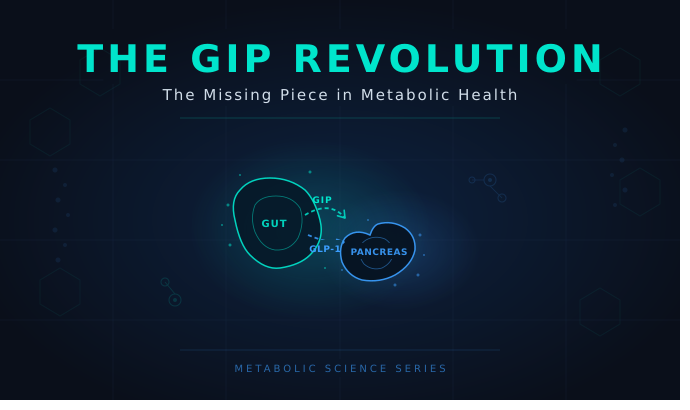
Gastric inhibitory polypeptide, I fear that i would break teeth. With such a critical name, GIP(Gastric inhibitory polypeptide) does something phenomenal inside our guts.
The most interesting part is that GIP is just more than a hormone itself. It also controls secretion of some other hormones inside the human body.
Although since at least last 4 decades it has been compared with a lower importance with GLP-1.

However, recent studies suggested otherwise. Recent studies suggests GIP and GLP-1 both belongs to a the same type of molecules the incretins.
As a complex and quite deep-down biochemical topic, finding easily understood content about GIP is fairly difficult, and they are often not for beginners, this content presents complex chemical ideas, hence it is difficult to absorb for regular non-professionals.
Here we have explained GIP in a way that is easily consumable for any reader who can hardly read and understand standard English. Rather than diving into complex endocrinology, here we have tried to see it through non-technical goggles. With a simple and straightforward goal to tell our readers what is GIP and how it is related to our health.
Key Takeaways
- GIP is a hormone your gut naturally releases every time you eat. Like GLP-1, it is part of a group of hormones called incretins — hormones that respond to food and help manage blood sugar, fat storage, and appetite.
- GIP works closely alongside GLP-1. While both hormones trigger insulin release after meals, GIP also plays a unique and separate role in how the body stores and breaks down fat.
- For a long time, GIP was considered less important than GLP-1 in metabolic health. New research — and new drugs like tirzepatide — have completely changed that view.
- Supporting GIP activity naturally through diet, and understanding how dual GLP-1 agonists and GIP agonists work, gives a fuller picture of how modern metabolic treatments are designed and why they are more effective than older single-target approaches.

What Is GIP? (In Plain, Easy Language)
GIP stands for Glucose-Dependent Insulinotropic Polypeptide. It is a compound that stimulates insulin release in a way that depends on glucose being present.
“Historically, GIP was originally called Gastric Inhibitory Polypeptide because researchers thought its main role was to reduce stomach acid secretion. Later research showed that its primary function is to stimulate insulin release in response to glucose, so the name Glucose-Dependent Insulinotropic Polypeptide became the preferred term.”
In simple terms: GIP tells the pancreas to release insulin but only when blood sugar is actually elevated. It does not trigger insulin release when blood sugar is normal or low. This built-in safety feature is important and we will come back to it.
GIP is produced by cells called K-cells, which are found in the upper part of the small intestine mainly in the duodenum and jejunum. These cells detect when food especially fat and carbohydrates enters the small intestine, and they respond by releasing GIP into the bloodstream.
GIP and GLP-1: The Two Incretin Hormones
GIP and GLP-1 belong to the same family of gut hormones called incretins. The word incretin comes from the phrase “intestinal secretion of insulin.” The gut secretes these hormones, and they increase insulin output from the pancreas after you eat.
| Feature | GIP | GLP-1 |
|---|---|---|
| Where it is made | Upper small intestine (K-cells) | Lower small intestine and colon (L-cells) |
| What triggers its release | Fat and carbohydrates entering the intestine | All macronutrients, especially protein and fat |
| Main effect on pancreas | Stimulates insulin release | Stimulates insulin release, suppresses glucagon |
| Effect on appetite | Mild or indirect | Strong- reduces hunger significantly |
| Effect on stomach emptying | Minimal | Significant- slows digestion down |
| Effect on fat tissue | Promotes fat storage when insulin is high; promotes fat breakdown when insulin is low | Limited direct effect on fat tissue |
| Effect on bone | Supports bone formation and density | Limited direct effect on bone |
| Brain receptors | Present — linked to reward and memory | Present — linked to appetite and satiety |
Both hormones work together after a meal to manage the body’s response to incoming energy. They are not competitors, they are partners. And as research has shown, activating both together produces better metabolic outcomes than activating either one alone.
What Does GIP Actually Do? The Day-to-Day Picture

GIP has several jobs in the body. Some of them overlap with GLP-1. Some are completely unique to GIP.
1. Stimulating Insulin After Meals
This is GIP’s primary and most well-understood role. When you eat a meal containing carbohydrates or fat, the gut rapidly releases GIP. It travels to the pancreas and tells the beta cells there to start releasing insulin.
This insulin response allows your body to move glucose from food into cells, where the cells use it for energy. Without adequate incretin signaling, blood sugar rises higher than it should and stays elevated longer.
2. Interacting With Fat Tissue
This is where GIP becomes genuinely interesting and quite different from GLP-1. Fat cells contain GIP receptors, whereas they contain very few GLP-1 receptors.
GIP has a dual relationship with fat tissue depending on the hormonal environment:
- When insulin levels are high (after a meal) — GIP promotes fat storage. It works with insulin to encourage fat cells to take in and store energy.
- When insulin levels are low (between meals, during fasting, or during exercise) — GIP may promote fat breakdown and release of stored energy.
This dual behavior sounds contradictory, but it actually reflects the hormone doing its proper job — helping the body store energy when food is available and release it when food is not.
3. Supporting Bone Health
One of GIP’s less talked-about but well-documented roles is in bone metabolism. GIP receptors are found on bone-forming cells called osteoblasts. When GIP is active, it supports the activity of these cells meaning it plays a role in building and maintaining bone density.
This is a unique feature of GIP that GLP-1 does not share, and it is one reason researchers are interested in GIP not just for metabolic disease but for bone-related conditions.
4. Brain and Reward Signaling
GIP receptors have been identified in the brain, particularly in areas linked to memory, learning, and reward behavior. While this area of research is still developing, early findings suggest GIP may influence mood, cognitive function, and how the brain responds to food rewards.
5. Insulin-Sensitizing Effects
Beyond just triggering insulin release, GIP also appears to improve how well the body’s cells respond to insulin; addressing insulin resistance at the cellular level rather than just pushing more insulin into the system.
What Happens to GIP in Type 2 Diabetes?
Here is where the story gets complicated. In people with type 2 diabetes, GIP’s effect on insulin secretion is significantly reduced. The pancreas becomes less responsive to GIP’s signal. This is called GIP resistance.
Interestingly, GIP levels in people with type 2 diabetes are not necessarily lower; the hormone is still being released. But the target tissue, the pancreas; has stopped listening to it properly.
For a long time this led researchers to conclude that GIP was not useful as a treatment target for diabetes. Why try to amplify a signal the body is already ignoring?
That thinking has now changed, and the shift in understanding is one of the most important developments in metabolic medicine in recent years.
Synthesis and Use as External Support: Dual Agonists, Peptides, and the New Science of GIP

Why GIP Became the Missing Piece
For decades, diabetes and obesity treatment focused almost entirely on insulin making more of it, making the body more sensitive to it, or replacing it directly. When GLP-1 agonists arrived, they added a new dimension — targeting the incretin system to naturally boost insulin response while also reducing appetite and slowing digestion.
But something was still missing. GLP-1 agonists worked well. GIP, dismissed as resistant in diabetic conditions, sat largely on the sidelines.
Then researchers discovered something unexpected. Even though the pancreas in people with type 2 diabetes is resistant to GIP, that resistance can be overcome — or reversed — when GIP is activated at the same time as GLP-1. The two hormones working together restore sensitivity that neither could restore alone.
This discovery opened the door to dual agonists.
Dual GLP-1/GIP Agonists: The Next Generation
A dual agonist is a compound that activates two receptors simultaneously. In metabolic medicine, the most important dual agonist developed so far activates both the GLP-1 receptor and the GIP receptor at the same time.
Tirzepatide — sold under the brand names Mounjaro (for type 2 diabetes) and Zepbound (for obesity) — is the most prominent example. It was approved by the FDA and has produced clinical trial results that have genuinely surprised even the researchers who ran the studies.
| Feature | GLP-1 Agonist Only (e.g. Semaglutide) | Dual GLP-1/GIP Agonist (Tirzepatide) |
|---|---|---|
| Blood sugar reduction | Significant | Greater than GLP-1 alone |
| Average weight loss in trials | ~10–15% of body weight | ~15–22% of body weight |
| Effect on fat tissue | Limited direct effect | Direct action via GIP receptors on fat cells |
| Effect on bone | Minimal | Potential bone-supportive effect via GIP |
| Nausea side effects | Common, especially early | Similar or slightly lower in some trials |
| Dosing frequency | Weekly (for semaglutide injectable) | Weekly |
Why Does Targeting Both Receptors Work So Much Better?
The answer comes back to how the two hormones work on different tissues.

GLP-1 is the stronger signal for:
- Reducing appetite and hunger through the brain
- Slowing digestion to prevent blood sugar spikes
- Suppressing glucagon in the pancreas
GIP adds:
- Direct action on fat tissue — supporting proper energy storage and breakdown
- Besides, restoration of pancreatic sensitivity to both hormones
- Additionally it also support bone health.
- Additional brain signaling through different receptor pathways
When both signals are active simultaneously, the combined effect on blood sugar, weight, fat metabolism, and insulin sensitivity is greater than either signal alone. This is called a synergistic effect; the total result is larger than the sum of its parts.
Peptide Research and GIP Pathways
Beyond pharmaceutical dual agonists, there is growing interest in the peptide research space around GIP pathway support. This parallels the interest in GLP-1 peptide research discussed in our previous article.
Researchers and biotech companies are exploring:
- GIP receptor agonist peptides– short synthetic peptides that activate the GIP receptor in similar ways to GIP itself
- Triple agonists — next-generation compounds that target GLP-1, GIP, and a third receptor (GLP-2 or glucagon receptor) simultaneously
- GIP analogs — modified versions of the GIP peptide structure designed to be more stable in the body and last longer than natural GIP
The rationale for all of these is the same as the rationale behind GLP-1 peptide research.
| Research Direction | Goal |
|---|---|
| GIP receptor agonist peptides | Activate GIP receptors directly |
| Dual GLP-1/GIP peptides | Replicate tirzepatide mechanism in research settings |
| Triple agonists | Add glucagon or GLP-2 receptor activation for broader metabolic effects |
| DPP-4 resistant GIP analogs | Extend GIP activity by resisting enzymatic breakdown |
The Chemical Side Simplified: What Makes GIP Work at the Molecular Level
Not everyone loves chemistry, nor it is that lovable. Still, knowing a little bit helps gain confidence that help understand easily.
GIP Is a Peptide Hormone, Just Like GLP-1
Forty-two amino acids link together in a specific sequence to form GIP.. Compare that to GLP-1 which is 30 amino acids long. Amino acids build both peptides. Both work by binding to specific receptors on cell surfaces.
Because GIP is a peptide, it faces the same challenge as natural GLP-1. The enzyme DPP-4 quickly breaks it down, usually within a few minutes after release. This rapid clearance limits how long its effects last under normal conditions.

The GIP Receptor and How It Works
The GIP receptor is a protein found on the surface of multiple cell types across the body. It belongs to a family of receptors called G protein-coupled receptors — one of the largest and most important receptor families in human biology.
When GIP binds to its receptor, it triggers an internal signaling chain inside the cell:
- GIP binds to the receptor on the cell surface
- The receptor activates an internal protein called a G protein
- The G protein triggers an increase in a molecule called cAMP inside the cell
- cAMP activates a cascade of proteins that produce the cell’s response — releasing insulin, storing fat, building bone, or whichever function that cell type carries out
Many peptide hormones in the body use this same general mechanism. It is a well-understood signaling system that pharmaceutical researchers know how to work with, which is part of why designing GIP receptor agonists has been achievable.
The Structural Similarity Between GIP and GLP-1
GIP and GLP-1 share a notable structural similarity. Additionally, both belong to a larger family of related peptide hormones called the glucagon peptide superfamily. Furthermore, this family also includes glucagon itself and GLP-2.

All members of this family share a similar core sequence at the beginning of their amino acid chain.
| Hormone | Amino Acid Length | Receptor | Enzyme That Breaks It Down |
|---|---|---|---|
| GLP-1 | 30 | GLP-1 receptor | DPP-4 |
| GIP | 42 | GIP receptor | DPP-4 |
| Glucagon | 29 | Glucagon receptor | DPP-4 and others |
| GLP-2 | 33 | GLP-2 receptor | DPP-4 |
Understanding that these hormones are structurally related helps explain why triple agonists, compounds that hit GLP-1, GIP, and glucagon receptors simultaneously are feasible and are now in late-stage clinical development.
Natural Support for GIP Release
Just as with GLP-1, there are dietary and lifestyle strategies that support your body’s own GIP production and activity.
Foods that stimulate GIP release:
- Dietary fat — one of the strongest stimulants of GIP secretion; healthy fat sources like olive oil, avocado, and fatty fish support GIP release.
- Carbohydrates — especially complex carbohydrates like whole grains and legumes trigger GIP through the upper gut.
- Dairy products — some research indicates dairy fat and protein produce a particularly strong GIP response.
- Mixed meals — Because the upper intestine releases GIP when fat and carbohydrates arrive together, balanced meals tend to produce a more sustained GIP signal than single-nutrient snacks.
Lifestyle factors:
- Physical activity improves GIP receptor sensitivity — similar to how it improves insulin sensitivity
- Maintaining a healthy gut lining supports the K-cells that produce GIP
- Managing chronic inflammation, which can interfere with incretin signaling at the receptor level
GIP The Underestimated Hormone That Completes the Picture
For most of modern medicine’s history focused on metabolic disease, GIP sat in GLP-1’s shadow — recognized but not prioritized. The story that GIP resistance made it irrelevant as a treatment target seemed like the end of the discussion.

The discovery that GIP and GLP-1 working together restore sensitivity that neither could restore alone has rewritten that story entirely.
Understanding what GIP does; how it partners with GLP-1, how it acts on fat tissue in ways GLP-1 cannot, how it supports bone health and brain signaling, and how it fits into the broader amino acid and peptide framework; gives a much more complete picture of how the body manages energy, weight, and blood sugar.
And like every other hormone covered in this series, GIP starts with amino acids. Amino acids build GIP and help maintain the cells that produce it. Additionally, the body’s ability to respond to GIP depends on nutritional inputs that ultimately trace back to the proteins and amino acids we eat every day.
The better you understand these systems, the clearer the connection becomes between what you eat, how your body responds, and what modern medicine is now able to support when those systems need help.
Leave a Reply