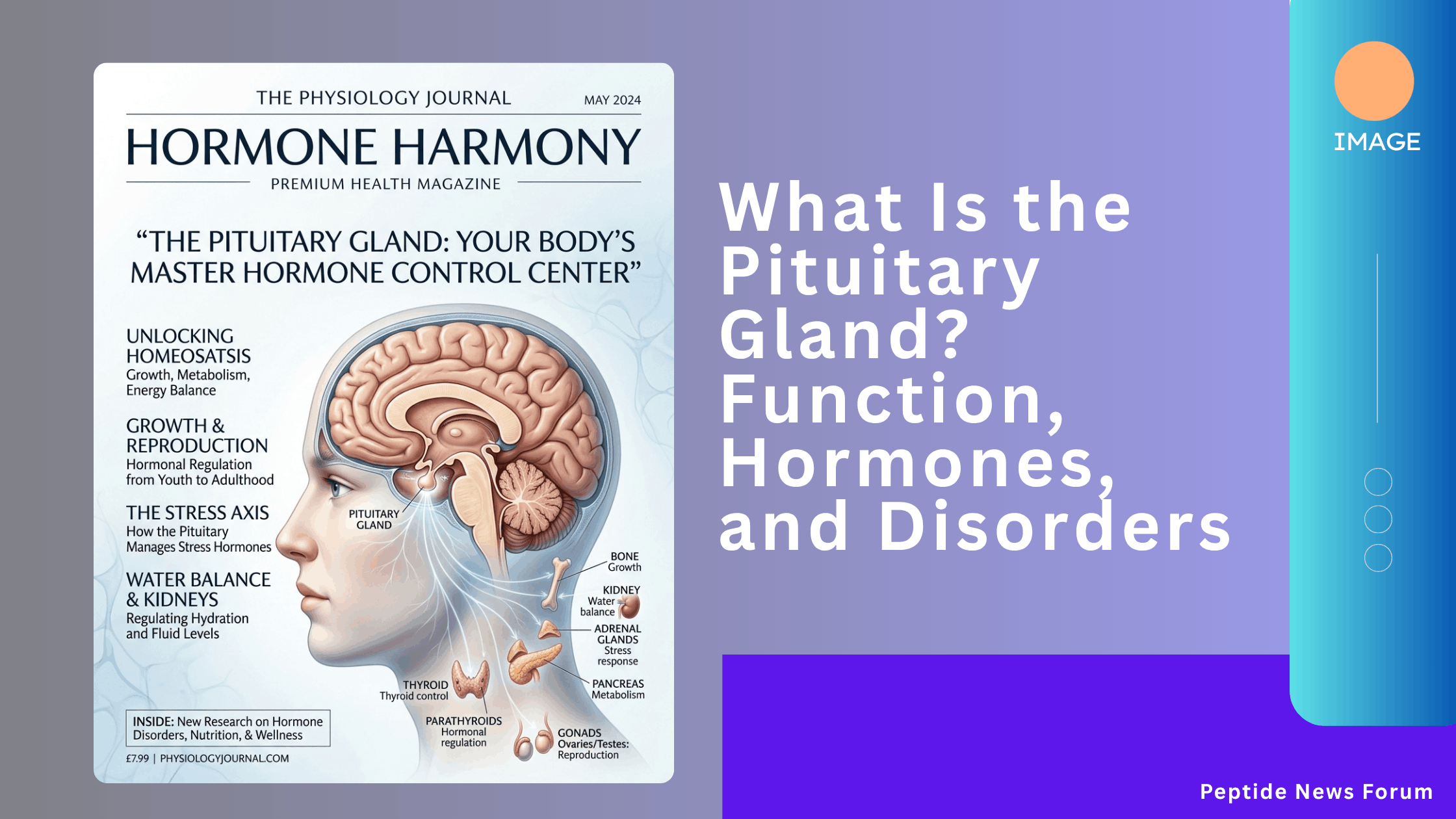
What Is the Pituitary Gland? The Body’s Master Hormone Control Center
If gonadotropin-releasing hormone, LH, and the rest of the reproductive hormone system are the messengers we’ve covered so far, the pituitary gland is the switchboard operator making sure those messages actually go out. This small but remarkably powerful gland doesn’t just control reproduction, it oversees growth, metabolism, stress response, and more.
Key Takeaways
- The pituitary gland is a small, pea-sized structure at the base of the brain that controls several other hormone-producing glands throughout the body.
- It’s made of two distinct parts: the anterior pituitary, which manufactures six major hormones, and the posterior pituitary, which simply stores and releases two hormones actually made in the hypothalamus.
- Anterior pituitary hormones include growth hormone, TSH, ACTH, FSH, LH, and prolactin, each controlling a different downstream gland or function.
- Posterior pituitary hormones, ADH and oxytocin, regulate water balance and labor/milk release, respectively.
- Pituitary disorders, including tumors, can cause either too much or too little of a specific hormone, producing very different symptoms depending on which one is affected.
- Several FDA-approved medications directly replace, mimic, or test pituitary hormone function, connecting back to hormones covered throughout this series.
The pituitary gland is a pea-sized structure at the base of the brain, often called the “master gland” because it controls several other hormone-producing glands throughout the body. It’s actually made of two distinct parts with different origins and jobs: the anterior pituitary, which makes six major hormones, and the posterior pituitary, which releases two hormones that are actually made elsewhere in the brain.
What Is the Pituitary Gland?
The pituitary gland is a small, oval-shaped gland located at the base of the brain, roughly behind the bridge of your nose. It sits inside a small bony cavity called the sella turcica, and despite being only about the size of a pea, weighing roughly half a gram, it controls an enormous range of bodily functions.
The pituitary connects directly to the hypothalamus, the brain region responsible for coordinating hormone signals, through a thin stalk called the infundibulum. This connection is exactly why the pituitary is often described as the go-between linking the nervous system and the endocrine system.
It’s frequently nicknamed the “master gland” because several of its hormones don’t act on the body directly. Instead, they travel to other glands, the thyroid, adrenal glands, and gonads, telling those glands what to produce. This is the exact same relationship covered in our guide to reproductive hormones, where the pituitary’s LH and FSH direct the ovaries and testes.
Two Glands in One: Anterior and Posterior Pituitary
Here’s something that surprises a lot of people: the pituitary gland isn’t really one uniform structure. It’s made of two distinct parts that develop differently, work differently, and even connect to the hypothalamus through entirely different mechanisms.
| Feature | Anterior Pituitary | Posterior Pituitary |
|---|---|---|
| Also called | Adenohypophysis | Neurohypophysis |
| Origin | Develops from oral tissue (Rathke’s pouch) | Develops as a direct extension of the brain |
| Connection to hypothalamus | Blood vessel network (hypophyseal portal system) | Direct nerve fibers |
| What it does | Manufactures its own hormones | Stores and releases hormones made elsewhere |
| Number of major hormones | Six | Two |
This distinction matters more than it might seem. The anterior pituitary is genuine, independent endocrine tissue that manufactures hormones in response to releasing signals like GnRH, arriving through a specialized local blood supply. The posterior pituitary, on the other hand, doesn’t make its own hormones at all. It mainly stores and releases hormones made by neurons in the hypothalamus. These hormones travel down nerve fibers to the posterior pituitary, where they are stored until they are released into the bloodstream.
The Six Hormones of the Anterior Pituitary
The anterior pituitary produces six major hormones, each with a distinct job:
- Growth hormone (GH), which supports growth in children and regulates metabolism, muscle, and bone health throughout life
- Thyroid-stimulating hormone (TSH), which signals the thyroid gland to produce thyroid hormone, regulating metabolism
- Adrenocorticotropic hormone (ACTH), which signals the adrenal glands to produce cortisol, the body’s main stress hormone
- Follicle-stimulating hormone (FSH), which supports ovarian follicle development in women and sperm production in men
- Luteinizing hormone (LH), covered in detail in our dedicated LH guide, which triggers ovulation in women and testosterone production in men
- Prolactin, which stimulates milk production after childbirth
Each of these hormones is released in response to a specific releasing hormone from the hypothalamus. These hormones travel to the pituitary through the specialized blood vessel network mentioned earlier.
GnRH triggering LH and FSH, as explained in our GnRH guide, is one example of this general process. The hypothalamus uses similar signals to control other anterior pituitary hormones as well.
The Two Hormones of the Posterior Pituitary
The posterior pituitary releases only two hormones, and as mentioned, neither one is actually made there.
Antidiuretic hormone (ADH), also called vasopressin, is made in the hypothalamus and travels down nerve fibers to the posterior pituitary for release. Its main job is telling the kidneys to retain water, which helps regulate blood pressure and prevent dehydration.
Oxytocin, also made in the hypothalamus, plays a well-known role in triggering uterine contractions during labor and supporting milk release during breastfeeding. It’s also been studied for its broader role in social bonding and emotional connection.
What Happens When the Pituitary Gland Malfunctions
Because the pituitary influences so many other hormone systems, problems here can produce a wide range of seemingly unrelated symptoms, which is part of why pituitary conditions can be tricky to diagnose.
| Condition | What’s Happening |
|---|---|
| Pituitary adenoma | A usually benign tumor of the pituitary gland; the most common pituitary problem overall |
| Prolactinoma | A tumor that overproduces prolactin, the most common type of hormone-secreting pituitary tumor |
| Acromegaly | Excess growth hormone in adults, causing gradual enlargement of hands, feet, and facial features |
| Gigantism | Excess growth hormone in children, before growth plates close, leading to unusually tall stature |
| Cushing’s disease | A pituitary tumor that overproduces ACTH, driving excess cortisol production |
| Hypopituitarism | Underproduction of one or more pituitary hormones, which can affect growth, metabolism, or reproductive function depending on which hormone is involved |
| Central diabetes insipidus | Insufficient ADH release, leading to excessive thirst and urination |
Symptoms depend on which hormone is affected and whether the pituitary produces too much or too little of it. This is why doctors often check several pituitary hormones instead of testing just one when they suspect a pituitary problem.
How Doctors Test Pituitary Function
Evaluating the pituitary gland usually involves a combination of approaches:
- Blood tests measuring specific pituitary hormones directly, along with the hormones they control (like thyroid hormone or cortisol)
- Stimulation tests, where a substance is given to see whether the pituitary responds appropriately, such as the macimorelin test used to evaluate growth hormone deficiency
- MRI imaging of the pituitary gland, since many pituitary problems stem from a structural issue like a tumor
- Visual field testing, since a larger pituitary tumor can press on nearby optic nerves and affect vision
FDA-Approved Medications That Work Through the Pituitary
Several established medications either replace a pituitary hormone directly or mimic its effects, and you’ve likely already encountered a few of these mentioned in earlier articles in this series:
- Somatropin (recombinant growth hormone), used to treat growth hormone deficiency
- Desmopressin, a synthetic version of ADH, used for diabetes insipidus and certain bedwetting conditions
- Oxytocin (Pitocin), used to induce or strengthen labor
- Cosyntropin, a synthetic ACTH analog used diagnostically to test adrenal gland function
- Thyrotropin alfa (Thyrogen), a synthetic TSH used diagnostically in thyroid cancer monitoring
- Macimorelin (Macrilen), covered in our ghrelin guide, used diagnostically to test for growth hormone deficiency by stimulating the pituitary
This is a useful reminder of something worth keeping in mind across this entire hormone series: many FDA-approved peptide and hormone drugs exist specifically to replace, block, or test a single, well-understood step in this pituitary-driven signaling chain, rather than doing something entirely novel to the body.
Frequently Asked Questions
Is the pituitary gland part of the brain?
It connects directly to the brain and sits just below the hypothalamus. However, the pituitary gland is technically a separate endocrine gland, not brain tissue. The main exception is the posterior pituitary, which develops as an extension of brain tissue.
Can you live without a pituitary gland?
Yes, though it requires lifelong hormone replacement therapy for the various hormones the pituitary would normally control or produce, since so many other body systems depend on its signals.
What’s the difference between a pituitary tumor and pituitary cancer?
Most pituitary tumors, called adenomas, are benign, meaning they don’t spread to other parts of the body. True pituitary cancer is considered rare.
Why does a pituitary tumor sometimes affect vision?
The pituitary gland sits close to the optic nerves. A tumor large enough to press against these nerves can cause vision changes, which is one reason eye exams are sometimes part of a pituitary workup.
How is the pituitary gland connected to the reproductive hormones covered earlier in this series?
The pituitary gland is where GnRH, released by the hypothalamus, triggers the release of LH and FSH. These two hormones play a major role in ovulation, sperm production, and the production of sex hormones. We cover these processes in more detail in our GnRH and LH guides.
Leave a Reply